Boards
/overboard/ - Overboard
Threads from every board in one list.
/general/ - General
General discussions
/anime-manga/ - Anime & Manga
Discussion centered around Japanese animation and comics.
/ai/ - Artificial Intelligence
For AI related discussions
/meta/ - Meta
For discussions about the website
/television/ - Movies & TV Shows
For your favorite movies and TV shows.
/technology/ - Technology
For technology, for AI discussion check out the AI board
/videogames/ - Videogames
From retro consoles to modern PC gaming.
Global Thread

224 replies and 75 images not shown. Open the thread to see all of them.
>>2361
On second thought having slept on it, I'm not entirely opposed to sticking around and babysitting a couple general threads. Is there any interest in reverse engineering, exploit development, microcontroller programming, and malware development? The other chan I browse with those subjects gets maybe fifteen posts a year. Everything is well within the confines of the law, there's just no good place to have a decent discussion about those topics. Reddit, X, and 4chan are very obvious non-starters for most topics.
>>2376
I try to keep the heart beating here from time to time but I have no understanding of those things tbh. My main reason for being here is to try to get some /g/ anons who want an AI board and talk about non-ai tech in peace to migrate here but it's like trying to convince a group of teenagers to use chopsticks to eat doritos/cheetos so they don't smear their room with that when eating it by hand.
I've mostly given up on that part and intent to populate the board with stuff worth discussing. Maybe that's all I can do because these retards clearly know about this place now, they call it 'laxy all the time.
>>2377
That's what I was touching on in >>2338 with the site and culture being dead. Their imitation of what an anon is on 4chan seems to have come exclusively from third and fourth hand sources telling the story very poorly. It has the same energy as somebody learning about American culture through Western movies and moving there in a 10-gallon hat and cowboy boots, speaking in an exaggerated Southern drawl. That's not what it is and you look ridiculous doing it.
File: prayer_works.webp (102 KB, 1080x809)

>>2366
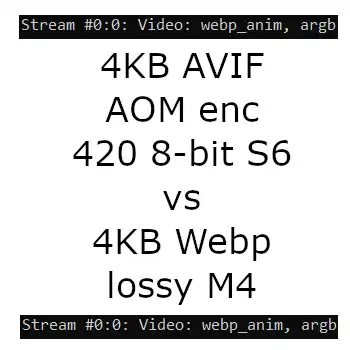
Mostly because of an RCE found in libwebp which is why adopting newer image/video codecs is so risky.
AFAIK it was isolated to lossless Webp but I guess it spooked everyone enough to avoid it.
>The image-based exploitation is related to WebP's lossless compression through the Huffman coding algorithm.
>If an attacker overflows the algorithmic data and replaces it with their own maliciously crafted image data, then the attacker can gain access to the victim's device and run code.
>Simply accessing the malicious image on the web page can trigger this vulnerability without any further user interaction.
https://www.upguard.com/blog/libwebp-cve-2023
Trending discussions
Pages
Community
- Clans Small groups of members
- Alliances Larger groups that clans can join
- Your clan
- Your alliance
Media
- Media database Anime, manga and games to rate and discuss
Rewards
- Achievements Challenges that unlock rewards
- Flairs Decorations for your profile and posts
- Treasures Gifts you can send to other members
- Supporter A badge and perks for backing the site
Your account
- Your profile
- Edit your profile Pictures, socials, flairs to wear, privacy
- Friends
- Messages
Newest in the media database
- Castlevania: Belmont's CurseVideogame, 2026
- skate.Videogame, 2025
- Hood Warfare 2Videogame, 2026
- Planet Zoo 2Videogame, 2026
- EnshroudedVideogame, 2026
- Dragon's Dogma 2Videogame, 2024